
Interior Design Explained: Principles, Methodology and Why It Changes Everything in a Project
Interior design is often misunderstood as decoration or style selection. Yet this interpretation is superficial. To truly understand interior design is to recognize it as a structured discipline that organizes space, shapes volumes, orchestrates light and creates both functional and sensory coherence.
What Is Interior Design?
Interior design is a discipline dedicated to shaping interior environments through the integration of aesthetic, functional, technical and sensory considerations.
It is built on multiple interconnected dimensions:
• Spatial organization
• Circulation and flow
• Proportion and balance
• Natural and artificial light
• Materiality and texture
• Overall visual coherence
Unlike decoration, interior design operates from the early conceptual stages. It analyzes the existing structure, identifies constraints and opportunities, and develops a clear spatial strategy.
A successful project is not defined solely by appearance. It is defined by how it feels to inhabit. This is precisely where interior design becomes transformative.
Core Interior Design Principles

Interior design principles form the structural framework of any coherent project. They are not rigid formulas, but foundational guidelines that ensure clarity and harmony.
1. Balance
Visual balance can be symmetrical, asymmetrical or radial. It prevents overcrowding or emptiness and creates an intuitive sense of stability.
2. Proportion and Scale
Proportion refers to the relationship between elements. Scale refers to their size relative to the space. A table that is too small in a large living room or an oversized light fixture disrupts spatial harmony.
3. Rhythm
Rhythm is achieved through repetition of shapes, materials or lines. It guides the eye and establishes visual continuity.
4. Hierarchy
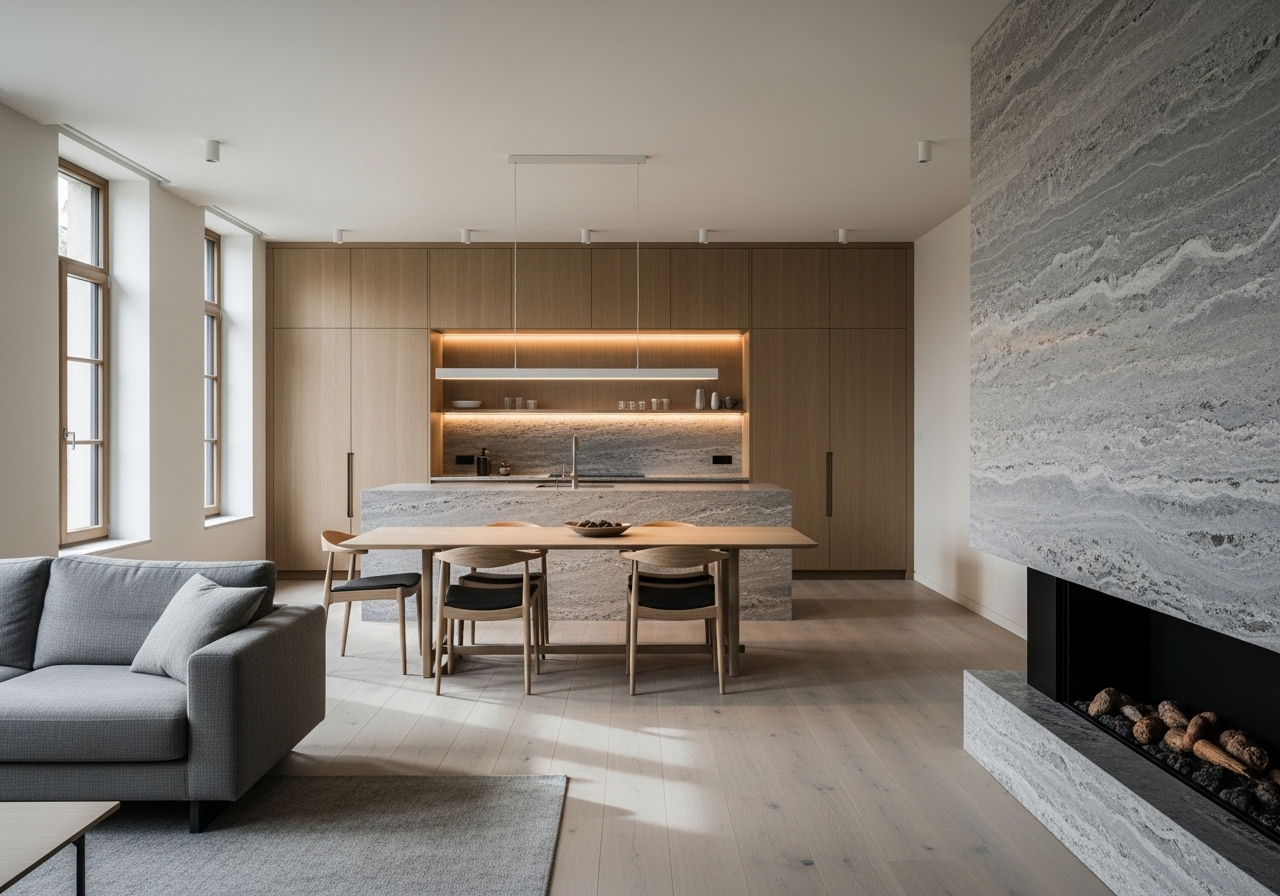
Every space needs a focal point. It may be an artwork, a structural element, a fireplace or a textured wall. Without hierarchy, an interior lacks clarity.
5. Harmony
Harmony ensures that colors, textures, volumes and objects interact cohesively. It connects all design decisions into a unified whole.
These interior design principles influence comfort, perception and daily experience. They operate beyond aesthetics and shape how a space functions.
Spatial Organization: The Invisible Foundation
A successful interior design project always begins with spatial analysis.
Before selecting materials or furniture, it is essential to understand:
• How movement flows through the space
• Where natural light enters
• Which architectural tensions exist
• How volumes interact
Spatial organization determines quality of life. Poor circulation leads to daily discomfort. Incoherent volumetric relationships generate visual fatigue.
Architectural reading identifies axes, structural lines, ceiling heights and proportional relationships. Interior design then acts as a tool to optimize and elevate these existing qualities.
Light, Material and Sensory Perception

Light is one of the most powerful elements in interior design.
It directly affects:
• Color perception
• Visual depth
• Comfort
• Biological rhythm
A well-designed project integrates layered lighting:
• Ambient lighting
• Functional lighting
• Accent lighting
Material selection plays an equally significant role. Textures absorb or reflect light. Matte finishes create intimacy. Polished surfaces amplify luminosity.
Interior design is therefore a sensory orchestration. It shapes atmosphere, not just appearance.
Interior Design Methodology: Structure and Precision
The quality of a project depends on its interior design methodology. A structured process ensures consistency and long-term coherence.
A professional methodology typically includes:
-
Lifestyle and needs analysis
-
Architectural study of the existing structure
-
Definition of concept and spatial intention
-
Spatial planning and layout development
-
Selection of materials and finishes
-
Lighting design strategy
-
Custom furniture and built-in design
-
Technical coordination
This structured approach prevents impulsive decisions. Every choice is aligned with a broader vision.
An effective interior design methodology also anticipates technical, structural and budgetary constraints, securing the project from costly inconsistencies.
Curation as a Quality Standard
Curation defines the final identity of a project.
Choosing fewer elements with greater intention.
Prioritizing quality over quantity.
Maintaining material and visual consistency.
A refined interior design does not multiply references. It establishes a clear language.
This involves:
• A controlled material palette
• Compatible textures
• Volumetric continuity
• Stylistic coherence
Curation transforms a space into composition.
Why Interior Design Changes Everything in a Project
An interior without structured thinking may appear visually acceptable in images. However, its limitations quickly become evident in daily use.
A project guided by interior design provides:
• Improved functionality
• Seamless circulation
• Long-term visual coherence
• Sensory comfort
• Enhanced property value
It reduces costly mistakes.
It prevents incoherent decisions.
It ensures a strategic long-term vision.
Interior design acts as an invisible backbone. It aligns architecture, aesthetics and usability.
Interior Design as Strategy, Not Decoration
Reducing interior design to decoration is a common misconception. Decoration operates at surface level. Interior design operates at structural depth.
It integrates architecture, usage and identity.
In a contemporary context where spaces must be adaptable, durable and responsive to complex lifestyles, interior design becomes strategic.
It is not about embellishing a space.
It is about making it coherent, efficient and meaningful.
Conclusion
Understanding interior design means understanding that a successful project does not rely on trends or accumulation of objects.
It relies on solid principles, a rigorous methodology and a vision capable of connecting function, emotion and aesthetics.
Interior design structures space, clarifies decisions and transforms the way we inhabit environments.
If you are considering a renovation or bespoke project, exploring a methodical and strategic approach to interior design can redefine your results.